Emergency Funds: How Much You Really Need (and Where to Park It)
A 3-month fund isn't enough for everyone. Use this framework to size yours, build it fast, then earn 4-5% on it without touching it.
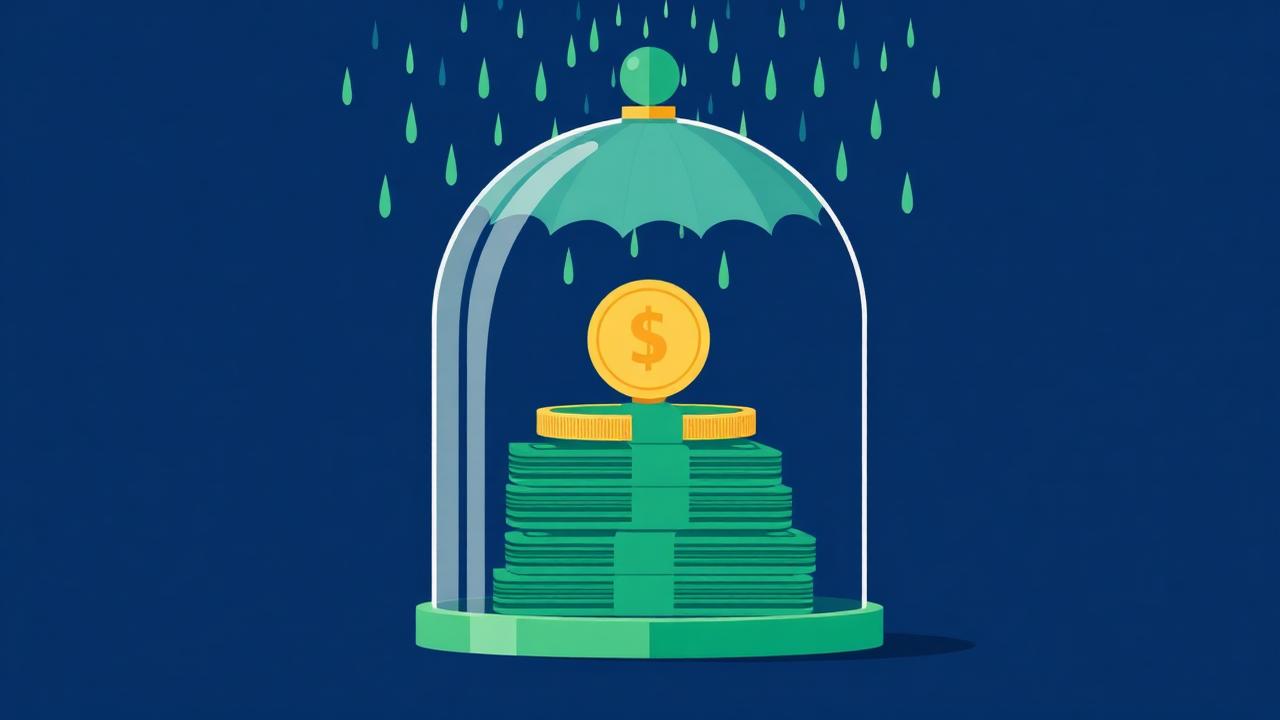
Table of contents
An emergency fund is the single most boring financial product you will ever own — and the one that quietly decides whether a bad month turns into a bad decade. People without one borrow at 24% APR to fix a transmission. People with one shrug, write a check, and move on.
An emergency fund turns a crisis into an inconvenience.
The good news: building one is straightforward. The catch is that almost every rule of thumb you've heard ("three to six months") is too generic to actually help you size it. This guide gives you a real framework — and tells you exactly where to keep the cash so it earns 4-5% instead of rotting in checking.
Why an emergency fund comes before almost everything else
Before maxing a Roth IRA, before chasing credit card points, before any aggressive debt payoff plan, you need a cash buffer. Here's why the order matters.
- Without cash, the next surprise expense goes on a credit card at 22-29% APR — wiping out years of investing returns in a single swipe.
- Job loss and market crashes tend to happen at the same time. Selling investments at a 30% loss to pay rent is the worst possible outcome.
- Debt snowballs fall apart the moment one emergency hits and forces a new balance. The fund is what protects the payoff plan.
- Insurance deductibles are often $1,000-$5,000. Without cash, you can't actually use the coverage you're paying for.
Think of it as the foundation under every other financial goal. Skip it and the whole structure is one bad week away from collapsing.
The right size depends on your job, not a rule of thumb
"3 to 6 months of expenses" is the default advice, but it lumps together a tenured teacher and a 1099 contractor with two kids. Your real number depends on income stability, household structure, and how fast you could realistically replace your income.
Start with monthly survival expenses, not lifestyle expenses
You're not budgeting for normal life — you're budgeting for a stripped-down version. Add up only the things that genuinely must be paid:
- Rent or mortgage + property tax + HOA
- Utilities, internet, phone
- Groceries (not restaurants)
- Insurance premiums (health, auto, home)
- Minimum debt payments
- Childcare and essential transportation
That number is usually 60-75% of normal monthly spending. Use the survival number to size the fund — not your full lifestyle budget.
Then multiply by your risk profile
- 3 months — Dual-income household, both on stable W-2 salaries, in-demand skills, no kids or dependents.
- 4-5 months — Single-income household with a stable W-2 job, or dual-income with kids and one variable paycheck.
- 6 months — Single earner with dependents, or anyone in an industry prone to layoffs (tech, media, finance).
- 9-12 months — Freelancers, 1099 contractors, commission-based workers, business owners, anyone with irregular income.
- 12+ months — Pre-retirees within 5 years of stopping work, or anyone with a known health condition that could interrupt income.
Example: survival expenses of $3,800/month × 6 months = $22,800 target. That's the number you're building toward — not a vague "a few months saved up".
Where to keep it (and where not to)
An emergency fund has exactly two jobs: be there when you need it, and not lose value while it waits. That rules out almost every "clever" option people try.
Best homes for the cash
- High-yield savings account (HYSA) — 4-5% APY at online banks, FDIC insured to $250k, transfers in 1-3 business days.
- Money market fund at a brokerage — similar yield, same-day liquidity if held at the broker you already use.
- Short-term Treasury bills or a T-bill ETF (SGOV, BIL) — backed by the U.S. government, state-tax exempt, very close to cash.
Bad places people still try
- Checking account — earning 0.01% while inflation eats 3% is a guaranteed loss.
- Stocks or index funds — the day you need the money is exactly the day they're down 30%.
- Crypto — too volatile and too easy to lose access to in a panic.
- CDs longer than 3 months — early-withdrawal penalties defeat the purpose.
- Your 401(k) — early-withdrawal penalty + taxes wipes out roughly 30-40% of the balance.
Rule of thumb: if it can drop 20% in a week, or if pulling the money takes more than a few business days, it does not belong in your emergency fund.
Earn 4.5%+ APY on your emergency fund
Compare top high-yield savings accounts — no fees, no minimums, FDIC insured to $250k.
How to build it fast (without quitting life)
Most people stall at $500 because they treat building the fund as something to do "with leftover money." There is never leftover money. Build it the same way you'd build any other goal — on purpose, with a deadline.
Step 1: Hit the $1,000 starter fund this month
Before anything else, get $1,000 in a separate savings account. This is not the real emergency fund — it's the bridge that stops you from reaching for a credit card the second something breaks. Sell unused stuff, pause investing temporarily, route a tax refund. Done in 2-4 weeks for most people.
Step 2: Automate a weekly transfer
Once the $1,000 is parked, set up an automatic transfer from checking to your HYSA the day after each paycheck. Even $75/week is $3,900/year. Treat it like rent — non-negotiable, scheduled, invisible.
Step 3: Throw every windfall at it until full
Tax refund, bonus, birthday cash, side gig, expense reimbursements, the $40 rebate you forgot about — all of it goes straight into the fund until you hit your target. Windfalls do 80% of the work; weekly transfers do the rest.
Step 4: Stop when you hit the number
An over-funded emergency account is a slow leak. Once you hit your target, redirect every dollar that was building the fund into investing or accelerated debt payoff. Cash earning 5% is fine; cash earning 5% when it could earn 10% in an index fund is a $50k mistake over a decade.
Rules for actually using it
A fund you never use because "it might be a real emergency next week" is the same as not having one. Set the rules in advance so you're not negotiating with yourself in a stressful moment.
What counts as a real emergency
- Job loss or income disruption lasting more than 2 weeks
- Major medical bill or out-of-pocket health expense
- Urgent car repair when the car is required for work
- Critical home repair (roof, heating in winter, burst pipe)
- Emergency travel for a sick or dying family member
What does not count
- Holiday gifts, weddings, or birthdays — these are calendar items, not emergencies
- A vacation deal, a sale, or a "once in a lifetime" purchase
- A predictable annual bill (car registration, insurance renewal) — that's a sinking fund, not an emergency
- Routine maintenance you knew was coming (new tires, dental cleaning)
- Investment opportunities, no matter how good they look
If you use the fund, the next priority — before anything else — is refilling it. Pause investing again if you have to. The fund must come back to full before life resumes normal.
Common mistakes that quietly cost people thousands
- Keeping it in the same checking account as everyday spending — it disappears into burritos within a month.
- Sizing it on gross income instead of survival expenses — you end up with twice as much cash as you need, dragging down long-term returns.
- Never starting because $20k feels impossible — $1,000 today protects you from the next 90% of small emergencies.
- Investing the fund "because rates will go up" — markets do not care about your timing.
- Treating it as a sinking fund for Christmas — keep planned expenses in a separate bucket.
- Forgetting to rebuild after using it — half of emergencies happen within 18 months of the last one.
A realistic timeline
On a median U.S. household income, with no extreme frugality, here's what "normal" looks like:
- Month 1: $1,000 starter fund in a separate HYSA.
- Month 2-6: Build to 1 month of survival expenses through automated transfers + first windfall.
- Month 6-18: Build to 3 months. This is the longest stretch — most people slow down here, and that's fine.
- Month 18-36: Reach your target (6-12 months for most readers). Switch every dollar back to investing the moment you hit the number.
Three years sounds slow. It isn't. Three years from now you'll either have a fully funded emergency account and a clean conscience, or you'll be in the exact same financial spot — except with another emergency or two behind you. Start the $1,000 starter today and let the rest take care of itself.
Frequently asked questions
Should I invest my emergency fund?+
No. The whole point is being there during a market crash and a job loss — events that historically happen at the same time. Earning 5% in a HYSA while you wait is plenty.
Is a HYSA actually safe?+
Yes, as long as it's FDIC insured (or NCUA insured at a credit union) up to $250k per depositor per bank. If your fund exceeds that, split it across two banks.
What counts as a real emergency?+
Job loss, major medical, urgent car or home repair, emergency travel for family. A vacation deal, a sale, or a holiday is not.
Should I pay off debt or build the fund first?+
Build a $1,000 starter first, attack high-interest debt aggressively (anything above ~7% APR), then finish the fund. Skipping the starter means the next surprise undoes all your debt progress.
Where should a couple keep it — joint or separate?+
Joint HYSA is simplest if you share finances. If you keep money separate, each partner should hold their share of the fund. What matters is that it's separated from daily spending.
What if I use it — do I have to refill it immediately?+
Yes. Pause investing temporarily and rebuild to your target before resuming. Roughly half of all emergencies happen within 18 months of the previous one.
Do retirees still need an emergency fund?+
Even more so — 1-2 years of expenses in cash protects against having to sell investments during a downturn early in retirement, which is the single biggest risk to a retirement plan.
Personal finance writer and ex-banker. Pays off his cards weekly.
Keep reading

High-Yield Savings vs. CDs vs. T-Bills: Where to Park Cash in 2026
All three pay 4-5% right now. Here's which fits your liquidity needs.

How to Negotiate a Raise (Script Included)
A two-meeting framework that's helped readers land 10-25% bumps without burning bridges.