Dividend Investing: A Realistic Guide for Income Seekers
Dividend yields, payout ratios, and why chasing high yields is usually a trap.
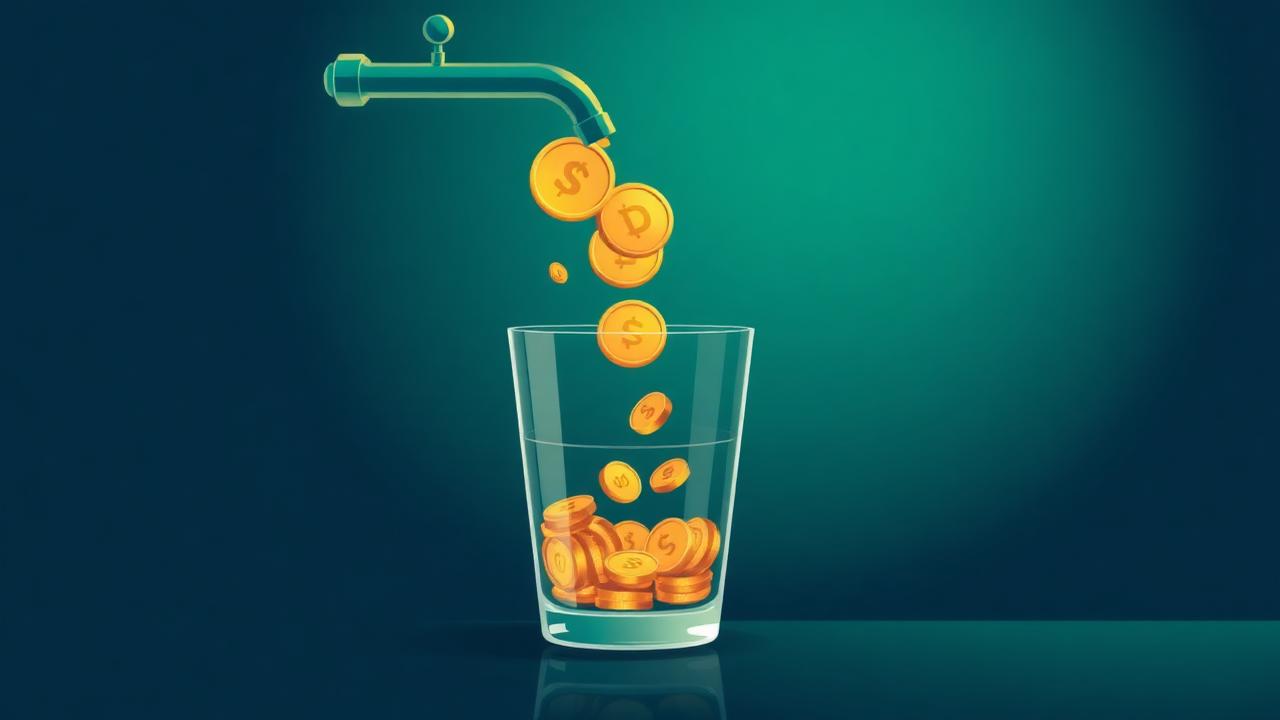
Table of contents
Dividend investing has a romantic appeal: own a basket of stocks, collect cash quarterly, never sell. It can absolutely work — but the version most people imagine (chase the highest yields, retire on the income) is the version most likely to underperform a plain index fund.
What a dividend actually is
A dividend is a portion of company profits paid out to shareholders, usually quarterly. A $100 stock with a 3% yield pays $3/year, or $0.75 every quarter. The yield isn't a return — it's a slice of what would otherwise be retained earnings.
Dividend yield is not free money
When a stock's price drops, its yield rises automatically — even if the dividend hasn't changed. A 9-10%+ yield is almost always a red flag, not a bargain. The market is pricing in a coming dividend cut.
- AT&T (T) — yielded 7-8% before cutting its dividend nearly in half in 2022.
- Many BDCs and mortgage REITs — chronic high yields and chronic NAV erosion.
- Most 'monthly dividend' YouTube favorites — engineered for yield, not total return.
Yield without earnings to support it isn't income — it's return of your own capital with extra steps.
The three numbers that matter
- Payout ratio — dividends / earnings. Above 80% is fragile; above 100% is borrowed.
- Dividend growth rate — 5-10%/yr is healthy; flat for years is a warning.
- Free cash flow coverage — does the actual cash, not just earnings, cover the dividend?
Dividend growth beats dividend yield
A company growing its dividend 8%/year starting from a 2.5% yield will pay more income at year 15 than a stagnant 6% yielder — and its stock will likely have grown more, too. Dividend growth stocks (often called 'Dividend Aristocrats') tend to be financially disciplined companies with durable economics.
ETFs make this easy
- SCHD (Schwab US Dividend Equity) — quality screen, ~3.5% yield, 0.06% fee. The default pick.
- VIG (Vanguard Dividend Appreciation) — pure dividend-growth focus, ~1.9% yield, 0.05% fee.
- DGRO (iShares Core Dividend Growth) — middle ground, ~2.4% yield, 0.08% fee.
Each holds 100+ companies with proven payout histories — instant diversification without the work of vetting individual names.
Tax treatment matters
Qualified dividends (most US stocks) are taxed at long-term capital gains rates: 0%, 15%, or 20%. REIT dividends are taxed as ordinary income — much worse. Hold REITs in a Roth or Traditional IRA whenever possible.
Should you actually focus on dividends?
If you're under 45 and accumulating, a total-market index fund (VTI) usually beats a dividend tilt on total return — you can always 'create your own dividend' later by selling 4% per year. If you're in or near retirement and want a behavioral anchor against selling in downturns, a dividend ETF is a reasonable, calming allocation.
Frequently asked questions
Are dividends taxed?+
Yes — qualified dividends at long-term capital gains rates (0/15/20%), ordinary and REIT dividends at your income tax rate. Holding in an IRA defers or eliminates this.
Can I live off dividends?+
Yes, eventually — but it takes a much larger portfolio than a 4% rule total-return retirement. Roughly $1.5-2M at a 3% yield to generate $50k/year.
Should I reinvest dividends (DRIP)?+
Yes during accumulation — automatic compounding with no friction. Turn off DRIP in retirement when you actually want the income.
What about international dividend ETFs?+
VYMI and IDV are reasonable. Higher yields than US, but more tax friction (foreign withholding) and more cyclical.
Are 'covered call' ETFs (JEPI/QYLD) dividends?+
Sort of — they generate income by selling options. High distributions, but capped upside. Treat them as a hybrid bond replacement, not a dividend growth play.
FIRE-track engineer hitting a 55% savings rate.
Keep reading
Passive Income: 7 Ideas That Actually Work (and 4 That Don't)
True passive income is rare. Here's what genuinely pays without daily effort — and what's just hype.
Buying Your First Rental Property: A 2026 Playbook
Cash flow vs. appreciation, the 1% rule, and the numbers that decide if a deal is worth doing.