Buying Your First Rental Property: A 2026 Playbook
Cash flow vs. appreciation, the 1% rule, and the numbers that decide if a deal is worth doing.
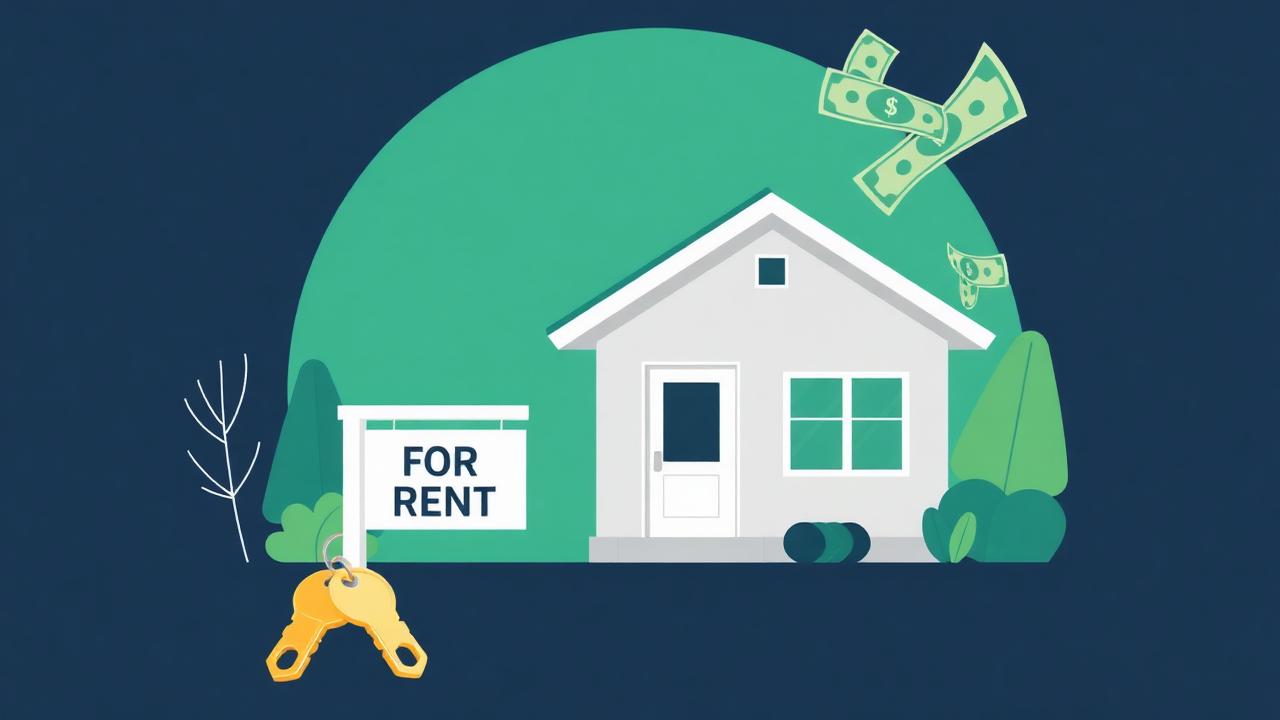
Table of contents
Real estate is one of the few asset classes you can buy with 80-95% borrowed money — and have a tenant pay down the loan for you. It's also the asset class most likely to wreck first-timers who skip the math. Here's how to find a deal that actually works.
Cash flow vs. appreciation
Every deal leans toward one of two strategies. Cash flow deals (Midwest, South) generate monthly profit but appreciate slowly. Appreciation deals (coastal cities) often break even on rent but build equity through rising values.
Beginners should prioritize cash flow. Appreciation is speculation; cash flow is income. If a deal is cash-flow positive at conservative numbers, you can survive a bad year.
Run the numbers before you fall in love
Use the 1% rule as a quick screen — monthly rent should be at least 1% of purchase price. A $250k house should rent for $2,500. Anything under 0.7% almost never cash flows.
Then build the real proforma. Take gross rent and subtract:
- Mortgage (principal + interest) — typically the biggest line.
- Property taxes — annual, varies wildly by state.
- Insurance — $1,200-$3,000/year for most single-families.
- Vacancy reserve — 8% of rent (about one month per year).
- Maintenance reserve — 8-10% of rent.
- Capex reserve — 5-10% for roof, HVAC, water heater eventually.
- Property management — 8-10% of rent (count it even if you self-manage).
If the deal only works at 0% vacancy and 0% capex, it doesn't work.
House hacking is the cheat code
Owner-occupied loans (FHA 3.5% down, conventional 5%) on a 2-4 unit property let you live in one unit while tenants cover most or all of the mortgage. You qualify based on 75% of expected rents, which makes the math easier than it sounds.
After 12 months you can move out, convert to a pure rental, and do it again. This is the fastest legal path from W-2 income to a small real estate portfolio.
Financing without surprises
- Get pre-approved before you shop — know your exact rate and max payment.
- Budget 3-4% of purchase price for closing costs.
- Have 6 months of PITI (principal, interest, taxes, insurance) in reserve at close.
- Avoid ARMs unless you have a specific exit plan inside the fixed window.
What kills first deals
- Underestimating capex — a $15k roof eats 5 years of cash flow.
- Assuming 0% vacancy or instant tenant placement.
- Skipping the inspection to win a hot offer.
- Buying out of state without local boots on the ground.
- Falling for HOA properties that ban or restrict rentals.
Should you actually do this?
Real estate is a job, not an investment, for the first year or two. If you don't enjoy negotiating with contractors, screening tenants, and tracking leases, an index fund is probably a better use of your money.
Frequently asked questions
Should I self-manage?+
Fine for one local door while you're learning. Beyond that, hire a manager — 10% of rent buys back your nights and weekends.
Single-family or multi-family for the first deal?+
Multi-family if you can house-hack. Otherwise single-family is easier to manage, finance, and sell.
What's a good cash-on-cash return?+
8-12% is solid in today's market. Anything below 6% is barely worth the work; above 15% usually means hidden risk.
How big should my emergency fund be for rentals?+
Separate from personal — 6 months of PITI per door, minimum, plus a $5-10k capex fund.
What about REITs instead?+
Genuinely passive, fully liquid, but you give up leverage and tax advantages. Great complement to direct ownership, not a perfect substitute.
FIRE-track engineer hitting a 55% savings rate.
Keep reading
Passive Income: 7 Ideas That Actually Work (and 4 That Don't)
True passive income is rare. Here's what genuinely pays without daily effort — and what's just hype.

Dividend Investing: A Realistic Guide for Income Seekers
Dividend yields, payout ratios, and why chasing high yields is usually a trap.