Retirement Planning in Your 30s: The Decade That Matters Most
Why your 30s do more compounding work than your 50s ever will — plus the four numbers to hit, the accounts to open, and the mistakes that quietly delay retirement by a decade.
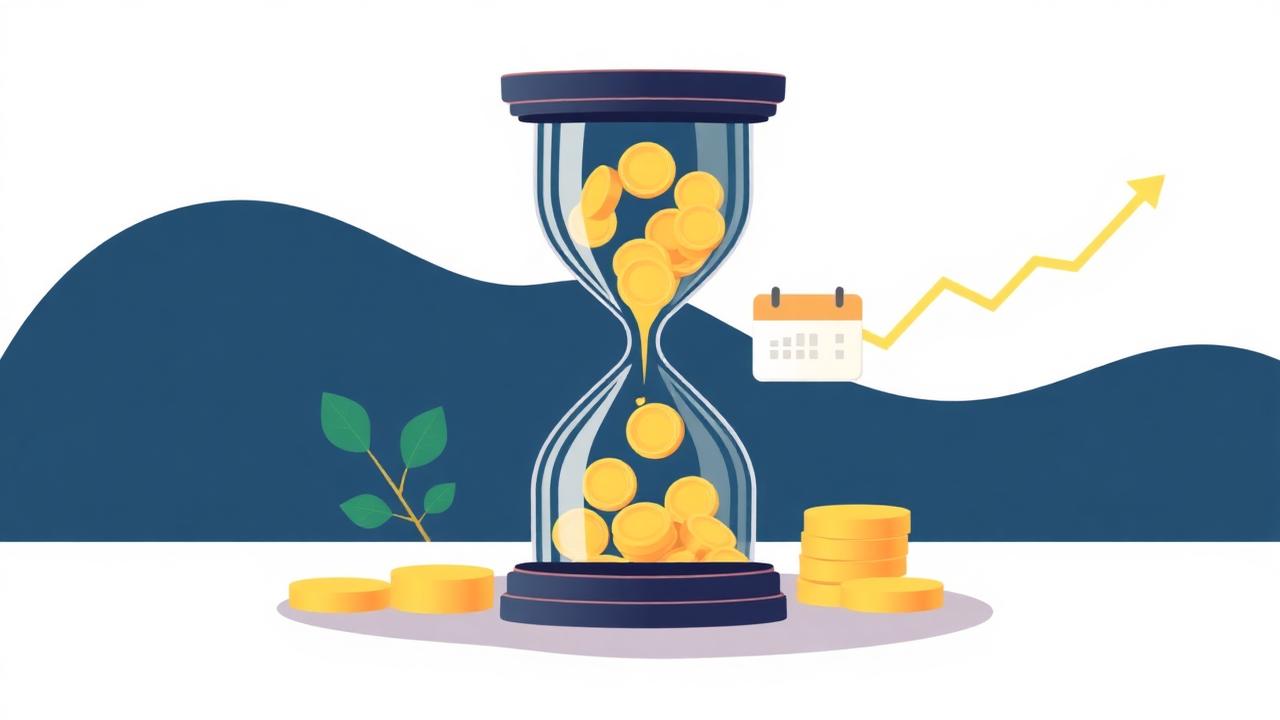
Table of contents
Most retirement advice is written for people who are either too young to care or too close to retirement to fix much. The truth is your 30s are the decade that quietly decides whether you retire at 60, 67, or 72. Every dollar you invest before 40 has 25-35 years to compound — which means it does more heavy lifting than anything you'll save in your 50s, even if you triple the contributions later.
The best time to plant a tree was 20 years ago. The second best time is today. — Chinese proverb
Why the 30s are the highest-leverage decade
Compounding is exponential, not linear. A dollar invested at 32, at a 7% real return, becomes about $15 by age 65. The same dollar invested at 52 becomes about $3.50. That's not a small gap — it's more than 4x.
Put differently: someone who invests $500/month from 32 to 42 and then stops completely ends up with more at 65 than someone who invests $500/month from 42 to 65 nonstop. Ten years of early contributions beat twenty-three years of late ones. That's the entire game.
- Your 30s have the most compounding runway you'll ever have again.
- Your 30s are also when income usually outpaces lifestyle — for now.
- Every year you delay roughly costs you a year of working later, on a 1:1 basis.
The four numbers to hit
Forget complicated projections. Most people who retire comfortably hit four simple targets through their 30s. Miss them and you'll likely work longer than you wanted to.
1. Save 15-20% of gross income
This is the single most important number in personal finance. It includes your contributions plus your employer match. Below 10% and you're almost certainly working past 65. Above 20% and you're buying optionality — early retirement, a sabbatical, a career pivot.
2. Get the full 401(k) match — every year
If your company matches 4% of salary and you contribute 0%, you just turned down a 4% raise. Over 30 years that's hundreds of thousands of dollars left on the table. Set your contribution to at least the match amount before you even look at other accounts.
3. Max a Roth IRA if you're eligible
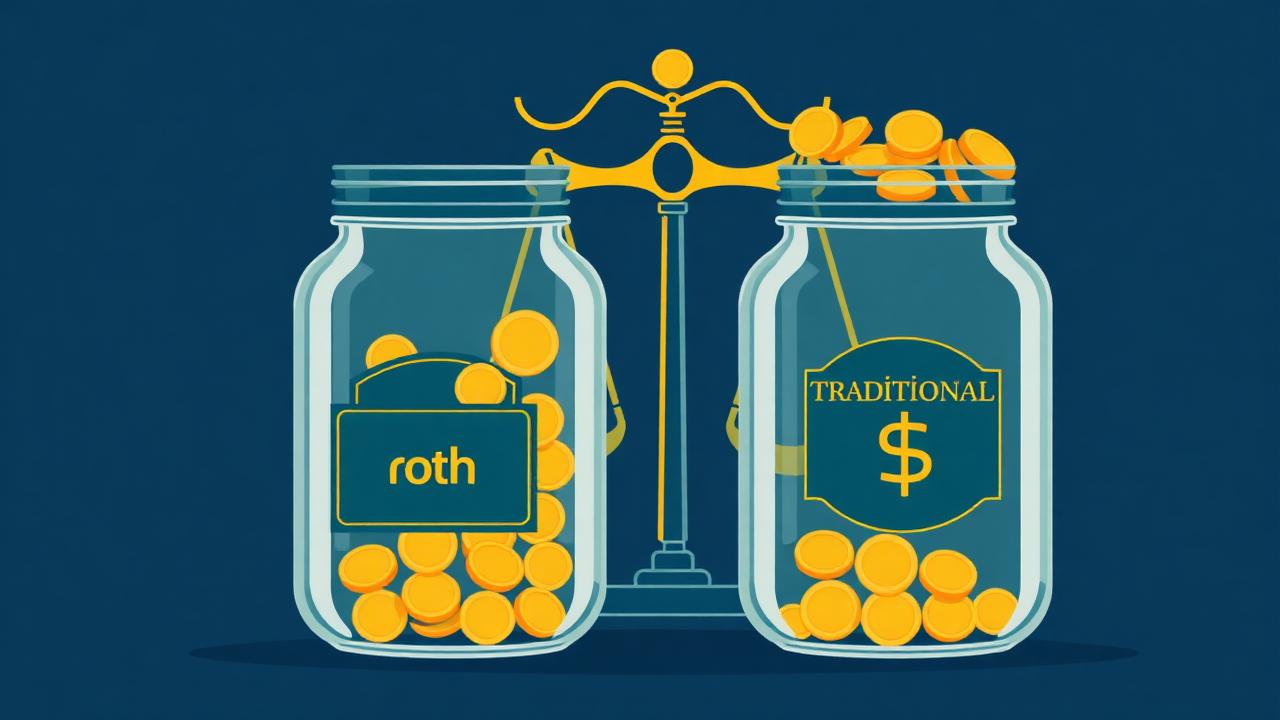
In 2026 the Roth IRA limit is $7,000 ($8,000 at 50+). Roth contributions go in after-tax, grow tax-free forever, and come out tax-free in retirement. Most people in their 30s are in a lower tax bracket than they'll be at 55 — which makes Roth a no-brainer.
4. Hit the salary milestones
- 1x your salary saved by age 30.
- 3x your salary by age 40.
- 6x your salary by age 50.
- 10x your salary by age 67.
These are Fidelity's well-known benchmarks. If you're behind, don't panic — the next section is for you.
The order of operations for retirement accounts
Where you put each dollar matters as much as the dollar itself. Here's the priority order that maximizes tax efficiency for almost every 30-something earner.
- 1) 401(k) up to the full employer match — instant 100% return.
- 2) Max your HSA if you have a high-deductible plan ($4,300 individual / $8,550 family in 2026). Triple tax-advantaged.
- 3) Max a Roth IRA — $7,000 in 2026.
- 4) Back to the 401(k) until you max it — $23,500 in 2026.
- 5) Taxable brokerage for anything beyond that.
If your income phases you out of Roth IRA contributions (~$165k single / $246k joint in 2026), use the Backdoor Roth — contribute to a Traditional IRA and convert it immediately. It's a routine, legal maneuver that takes about 10 minutes a year.
What to actually invest in
Your 401(k) menu will look intimidating. Ignore 95% of it. For almost every 30-something, the right portfolio is two or three funds, held for decades.
The simplest possible portfolio
- 80-90% U.S. total stock market — e.g. VTSAX, FXAIX, or your plan's S&P 500 index fund.
- 10-20% international stocks — e.g. VTIAX or FTIHX.
- 0-10% bonds — start adding more as you cross 45.
If you don't want to think about it at all, pick the Target Date Fund matching your expected retirement year (e.g. Vanguard Target Retirement 2060). It will rebalance and de-risk automatically for the next 30+ years. The fees are slightly higher than DIY, but the behavioral advantage is huge.
Avoid these tempting mistakes
- Loading up on company stock — your job is already concentrated risk in that company.
- Picking last year's best-performing fund — performance does not persist.
- Buying actively-managed funds with 1%+ expense ratios — that 1% compounds to 25-30% of your final balance.
Lifestyle creep is the silent killer
Your 30s are when income usually grows fastest — promotions, switching jobs, dual incomes, equity vesting. They're also when spending grows fastest if you're not careful: bigger house, nicer car, more travel, kids, private schools. The 30s retirement failure mode isn't earning too little. It's letting every raise immediately become spending.
The raise split
Every time you get a raise, split it on the same day. A simple rule: 50% goes to lifestyle, 50% goes to savings (raise your 401(k) contribution percentage that afternoon, before the new paycheck hits).
Do this consistently and your savings rate climbs through your 30s without ever feeling like deprivation. Skip it and you'll wake up at 45 making twice as much but saving the same percentage you did at 28.
If you're behind, here's the catch-up plan
Most people in their 30s haven't hit Fidelity's benchmarks. That's normal. Here's how to close the gap without lighting your life on fire.
- Get the full match this month — no exceptions.
- Raise your 401(k) contribution by 1% every six months. You won't feel it.
- Direct every windfall — bonus, tax refund, side income — straight to the Roth IRA.
- Audit subscriptions and one big fixed cost (rent, car, insurance) once a year. Big wins live there, not in your coffee budget.
- Delay lifestyle upgrades by 12 months. The car can wait. The kitchen can wait.
A 35-year-old who jumps from 8% to 18% savings rate adds roughly 7-9 years of retirement runway. The math is brutal in your favor when you have 30 years of compounding ahead.
What to expect over the next 30 years
Set the expectation now so you don't sell at the worst possible moment. Across a 30-year career, you should expect: 6-8 bear markets (down 20%+), 2-3 crashes that feel apocalyptic, several flat decades that test your patience, and a few unexpected windfalls.
Your only job is to keep contributing through all of it. The investors who beat the market aren't the smartest — they're the ones who didn't sell in 2008, 2020, or 2022. Set the contributions, hide the app, check once a quarter.
Frequently asked questions
401(k) or Roth IRA first?+
Match first (always), then max the Roth IRA, then go back and max the 401(k). Tax diversification across pre-tax and post-tax accounts is one of the best gifts you can give your future self.
Is it too late to start at 38?+
Not at all. Most people who retire comfortably get serious in their late 30s. Starting at 38 with a 15-20% savings rate still gives you 25+ years of compounding — enough to hit a normal retirement comfortably.
Should I pay off my mortgage or invest more?+
If your mortgage rate is under ~6%, invest. If it's above 7%, lean toward extra principal payments. In between, split. Never skip the 401(k) match to pay down a low-rate mortgage.
What if my employer doesn't offer a 401(k)?+
Open a Roth IRA today, then a SEP-IRA or Solo 401(k) if you have any self-employment income. A taxable brokerage account works for everything beyond that — long-term capital gains rates are still very friendly.
How much do I actually need to retire?+
A reasonable target is 25x your annual spending (the inverse of the 4% rule). If you spend $60,000/year, aim for $1.5M. Adjust upward if you want to retire before 60 or expect higher healthcare costs.
Should I use a target date fund or pick my own?+
If you'll actually rebalance once a year, DIY is slightly cheaper. If you won't — and most people won't — the target date fund's 0.05-0.15% extra expense ratio is one of the best deals in finance.
What about Social Security — can I count on it?+
Yes, but plan for roughly 70-80% of currently-promised benefits if you're under 40. Treat it as a meaningful supplement, not the foundation. The foundation is what you save now.
I have kids — should I save for college or retirement first?+
Retirement, every time. Your kids can borrow for college; you cannot borrow for retirement. Fund the 401(k) match and Roth IRA before any 529 contributions.
Certified Financial Planner with 12 years guiding first-time investors.